Precision Navigational Instruments · Est. 1962
Sextants, chronometers, and celestial tools — a way home that doesn't depend on a satellite.
A graduated dial, a horizon, and a star fixed above it. The ring borrows its sixty graduations from the sextant's limb and the chronometer's minute track; the hairline is the horizon every sight is taken against; the star leans north, the way a needle settles.
Built on a 96-unit grid. The dial sits at r34.5; sixty graduations fall every 6°, doubled at the twelve cardinal points. The star's north point rides r30, its south point r26.5 — a deliberate 3.5-unit bias toward Polaris.
Nothing enters the clear space — no type, no rules, no page edge. Below 48px, switch to the small-size artwork: twelve graduations, a bolder star, no punched pivot. The mark is never rotated, outlined, or set on imagery busier than open sky.
The wordmark is set in Cormorant Garamond SemiBold capitals, tracked 30% — wide enough to feel engraved, never so wide it stops being a word. The ampersand is italic and, in colour applications, the only element allowed brass besides the star.
MERIDIAN & CO.
Greenwich · Est. 1962
Stacked lockup — primaryMERIDIAN & CO.
Wordmark — used aloneMERIDIAN & CO.
Precision Navigational Instruments
Horizontal lockupNo. 0417 · SEXTANT
Brass — 60° arc — mahogany case
Instrument designation — product contextAlways italic, never removed. "& Co." is not decoration — it is the promise that a person, not a platform, stands behind the instrument.
30% on capitals, always. Trailing-side bearing is optically compensated so centred settings sit true on the page.
Product and place lines set in Space Grotesk at 9–11px, tracked 42%, in brass on light grounds and 50% vellum on dark.
Five colours, held to strict proportions. The system lives on uncoated paper tones; colour appears the way it does on the instruments themselves — brass in small, deliberate amounts, blued steel rarer still.
#F3F0E8 · 243 240 232
Chart paper and uncoated stock. The ground the whole system stands on.
#171B1E · 23 27 30
Near-black with a green undertone — the sky an hour after dusk. Type, engraving, dark panels.
#A87F3D · 168 127 61
Machined, lacquered, handled for decades. Reserved for the star, the ampersand, and fine rules.
#2F4B5C · 47 75 92
The flame-blued hand of a chronometer. Data, diagrams, and quiet interactive states.
#9AA1A6 · 154 161 166
Brushed fittings and serial numbers. Captions, hairlines, and metadata.
Usage by area, per 100 parts. Brass never exceeds its six — like on the instrument, it is the part you notice because there is so little of it.
Two voices. Cormorant Garamond speaks for the record — headlines, the wordmark, moments of ceremony. Space Grotesk runs the workshop — labels, data, serial numbers. They never share a sentence.
Aa
Cormorant Garamond
High-contrast and engraved in feeling — closer to a dial's chapter ring than a book face. Set headlines in Medium, the wordmark in SemiBold caps, and reserve the italic for asides, coordinates, and the ampersand.
AaBbCcDdEeFfGgHh 0123456789 °′″ & — ☆
Aa
Space Grotesk
A technical grotesque with instrument-dial manners. Uppercase, tracked 24–42%, at 9–13px for labels and specifications; Regular at 15px for reading text. Never used for headlines.
AaBbCcDdEeFfGgHh 0123456789 °′″ № — ±
Display
Cormorant Medium · 64–104px
Caps · +14% tracking
Fix your position
Headline
Cormorant Medium · 32–54px
Sentence case
The sea keeps no addresses.
Aside
Cormorant Italic · 19–25px
Brought down to the horizon, corrected for index error, read to the half-minute.
Body
Space Grotesk Regular · 15px / 1.7
Every Meridian instrument is engraved with its number, its maker, and the date it left the bench. If it ever drifts out of true — in ten years or in sixty — it comes back to Greenwich and we make it right. That is the whole warranty.
Label
Space Grotesk Medium · 11px
Caps · +32% tracking
Sextant · No. 0417 · Brass
Data
Space Grotesk Regular · 12px
Caps · +22% tracking
Lat 51° 28′ 38″ N — Long 000° 00′ 00″ W — GMT 12:04:17
A Cormorant headline always enters first. Space Grotesk supports below, at a third of the size, never above.
The two faces never mix inside a sentence. The single exception is the italic ampersand inside the wordmark.
No bold sans headlines, no condensed faces, no drop shadows on type, no all-caps Cormorant below 24px.
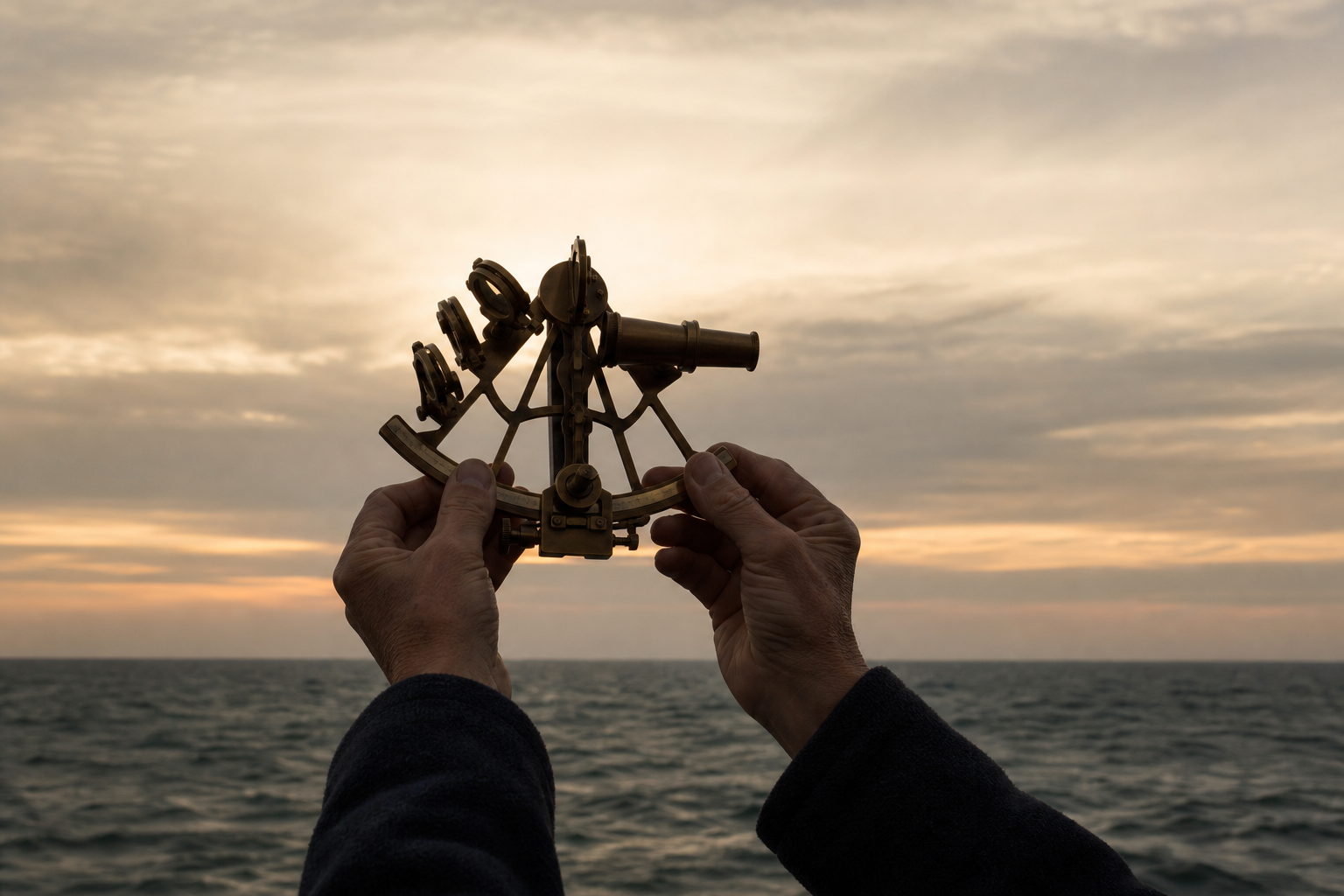
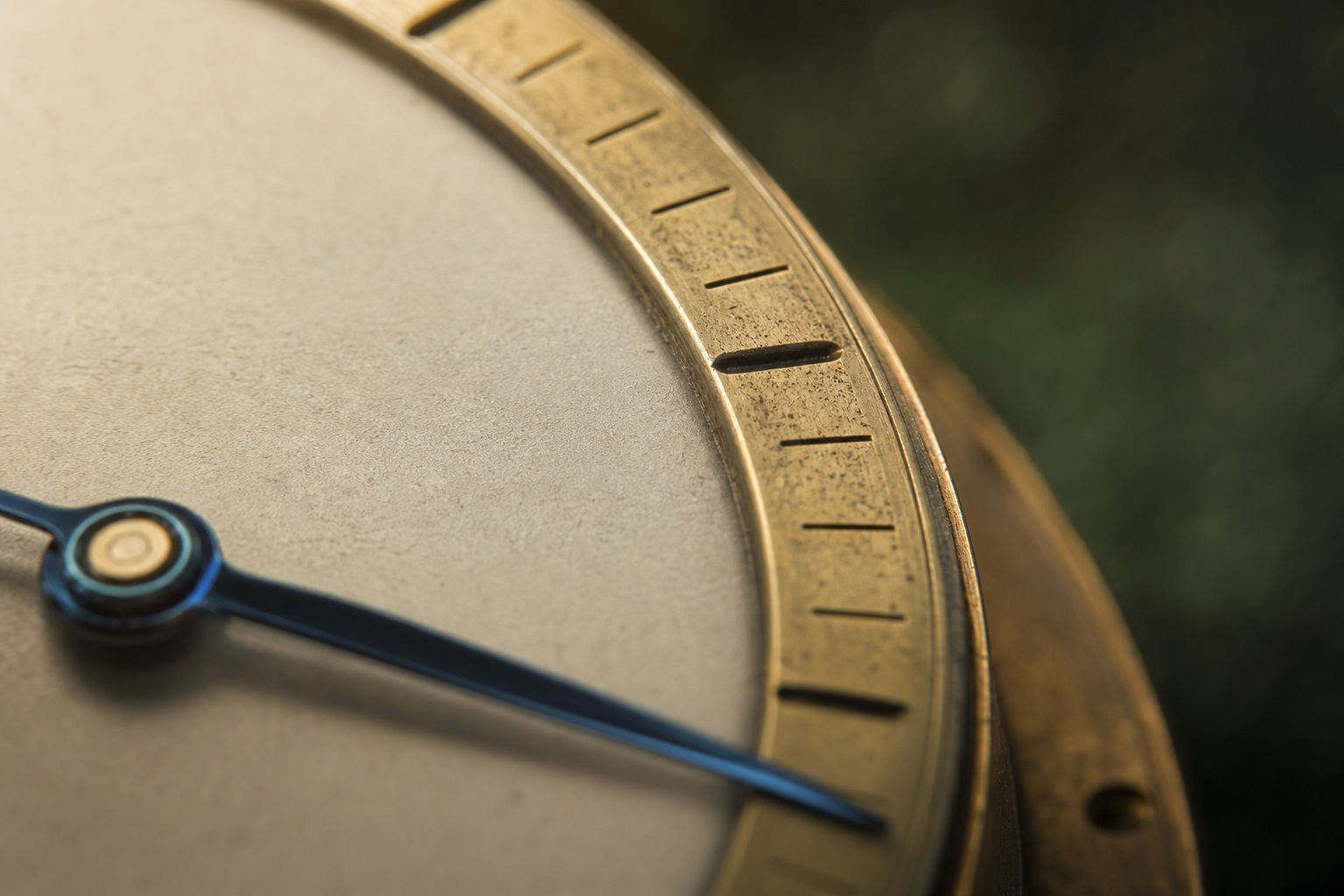
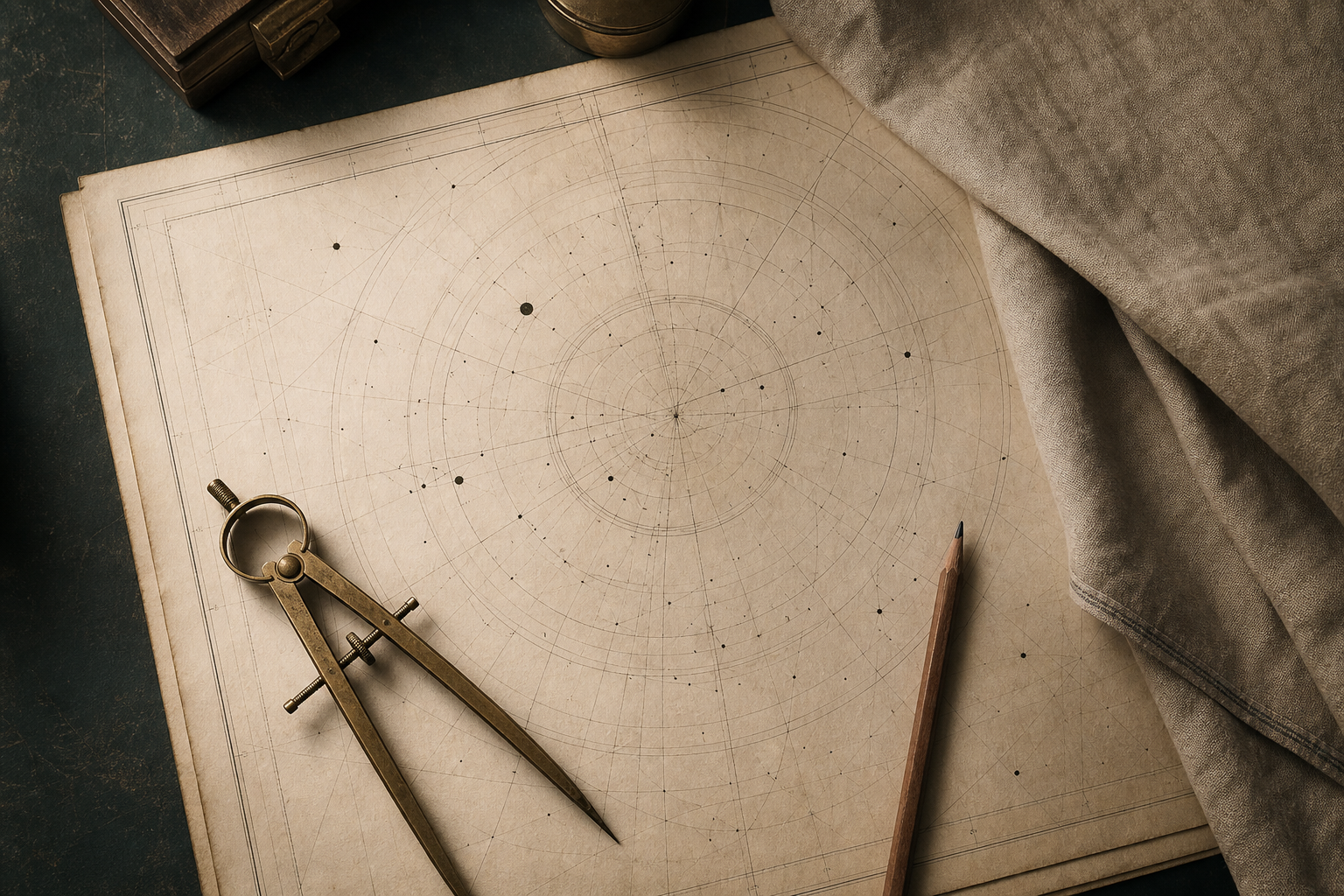
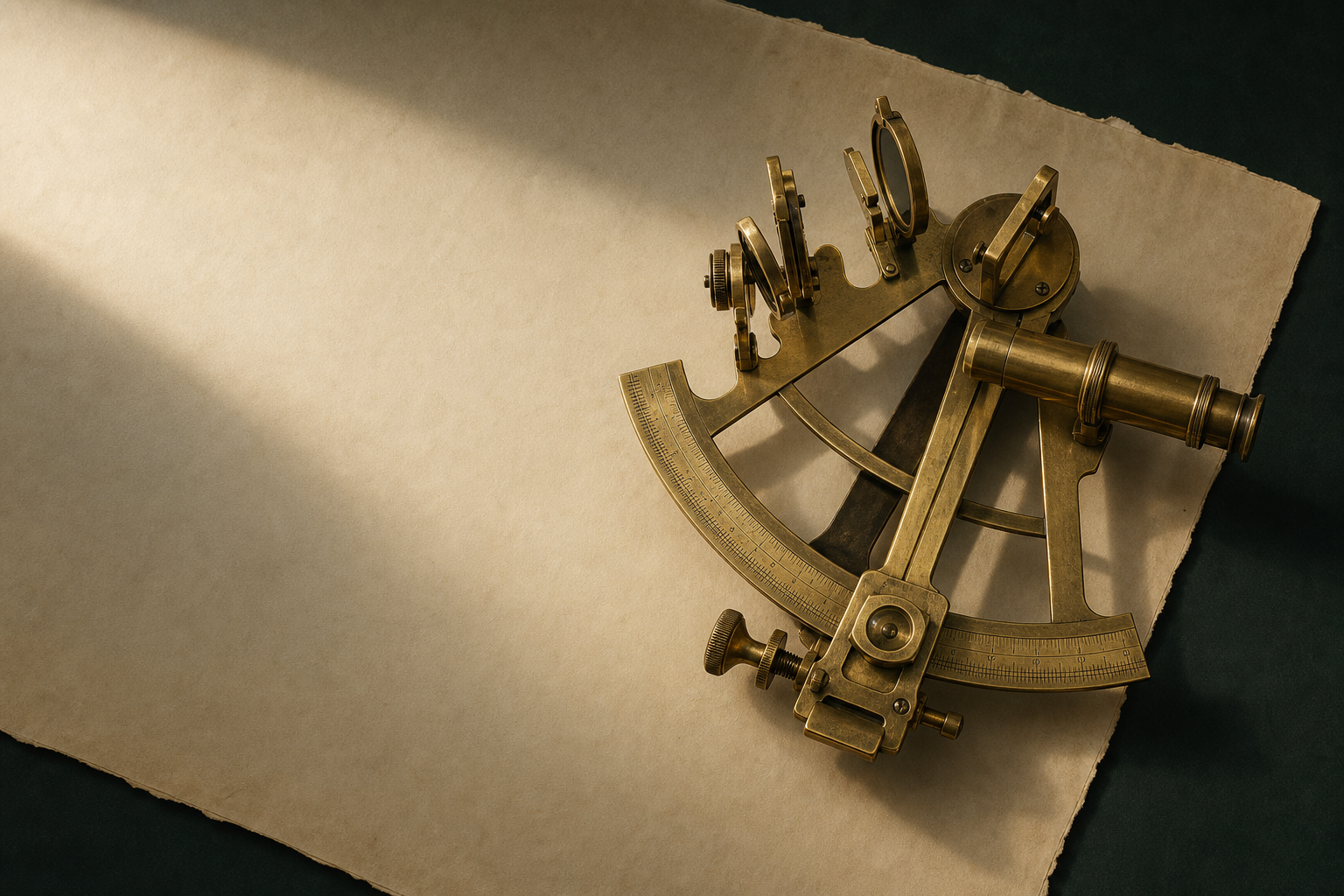
Photographed the way the instruments are made: available light, real materials, nothing styled that didn't earn its place in the frame. Vellum, brass, and the green-black of a chart room after dark.
Single-source, directional, never corrected flat. Shadows stay; they are half the drawing.
Instruments are shown being used — a sight taken, a chart worked. Never floating on seamless white.
Colour is pulled back to the palette: ivory, aged brass, charcoal green. If it glows, it goes.
The system at working size — paper, brass, glass. Everything below is set in code with the production artwork, the way a printer would receive it.
Meridian & Co.
Greenwich
E. Marlowe
Keeper of Instruments
Ink board on the face, vellum on the back — the two grounds of the system in one object. The small-size mark is foil-blocked in brass; the reverse is letterpressed in a single pass of Meridian Ink.
Meridian & Co.
No. 0417 — Sextant
Brass, 60° arc, mahogany case
Checked & sealed — Greenwich
Tied to every instrument that leaves the bench. Vellum card, brass eyelet, waxed linen string. The full mark appears here — it is the largest the tag will ever need, and it still holds.
Meridian & Co.
Marine Chronometer · No. 0417
Greenwich — 51° 28′ 38″ N · 000° 00′ 00″ W
Door plates, case medallions, the dial itself: the mark engraved into Instrument Brass and left to age. Single-depth engraving, no infill — the shadow does the work that ink does on paper.
The companion app reduces sights and keeps the instrument's service record. Reversed small-size artwork on Meridian Ink, corner radius left to the platform. It reads at 34 pixels because that is where it will live.
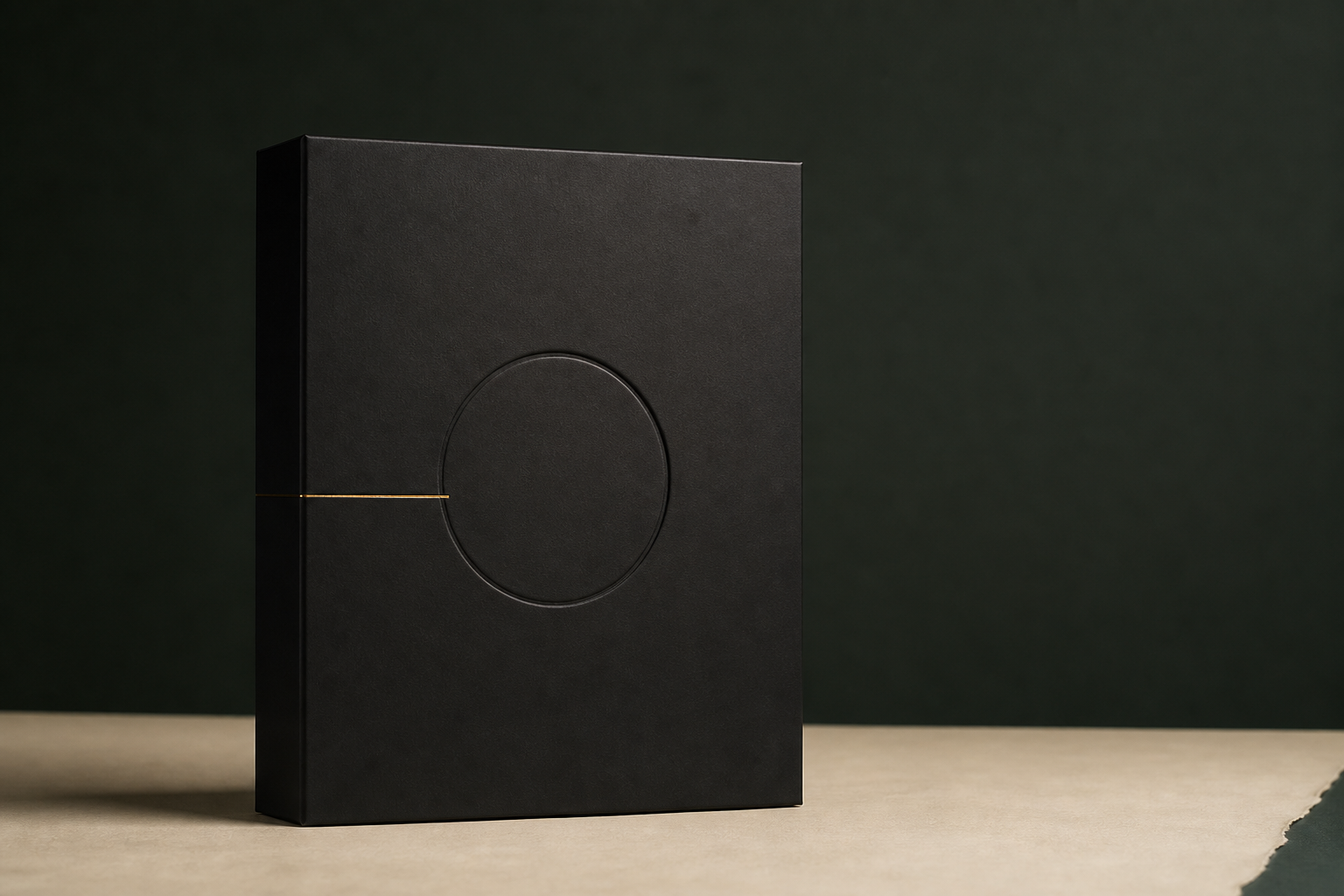
Every instrument ships in a charcoal board case. The dial ring and horizon are debossed into the lid; the star and wordmark are the only foil — brass, of course, and nothing larger than it needs to be.
Navigation is a promise: given a star and a horizon, you can always get home. The identity is built from exactly those two things and nothing else.
The mark takes the sixty graduations of a sextant's limb and sets a star above a horizon hairline inside them. Its north point is deliberately longer than its south — a needle settled toward Polaris, the one fixed reference every navigator trusts. There are no anchors, no rope, no navy blue, because the instruments themselves never needed them.
The palette is taken off the bench, not out of a brand book: vellum paper, green-black ink, brass used the way brass is used on the instrument — a few grams where it matters. Cormorant Garamond carries the voice of an engraved dial; Space Grotesk does the workshop's paperwork. The result should feel like it was always there, the way a good instrument does.